Use first-party data, engagement signals and broad delivery to help Meta find more people similar to valuable Cosmetics Brands customers without over-fragmenting spend.
Plan audiences →Sponsored • Cosmetics BrandsLearn more
For Cosmetics Brands teams, growth decisions are stronger when Facebook and Instagram campaign structure, creative testing, audience learning, and conversion reporting reflect beauty shoppers comparing products, routines, proof points, and brand point of view.
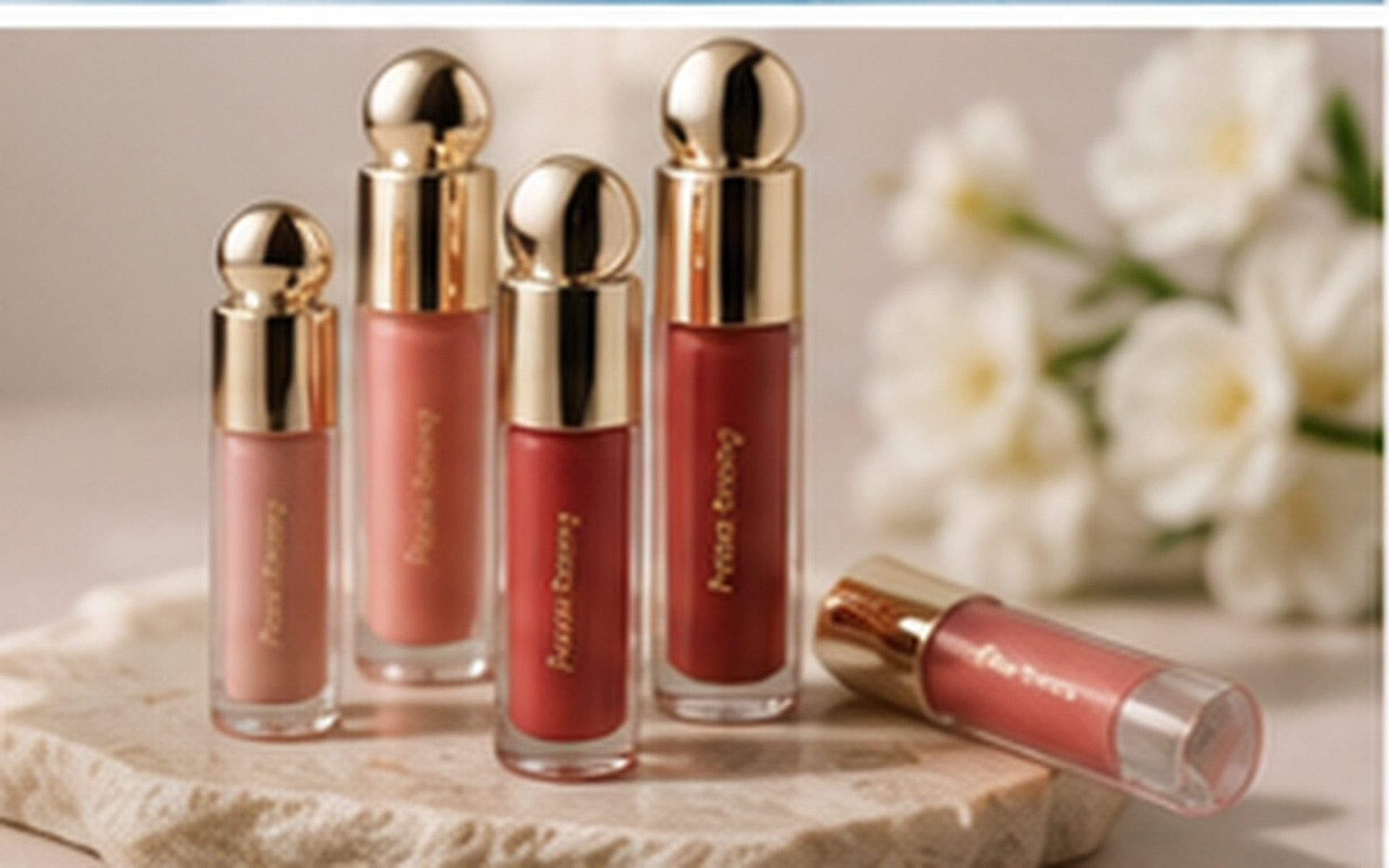
For Cosmetics Brands, the account has to preserve brand distinctiveness while producing new-customer growth. We treat creator language, visual identity, product storytelling and offer pressure as separate levers, then measure whether acquisition remains healthy when discounts or novelty fade. That makes the creative system responsible for both demand creation and conversion instead of turning every ad into the same promotional template. Brand pages also need a deliberate portfolio view: hero products can open demand, secondary SKUs can deepen baskets, and launch creative can refresh attention without making the entire account dependent on constant novelty. We therefore track which messages recruit new buyers versus merely harvest existing brand familiarity.
Trusted Experience
Selected brand experience supplied by Neighborhood Reach Marketing across ecommerce, beauty, consumer products and specialty retail. Logos indicate team experience; they are not presented here as performance claims or endorsements.








Cosmetics Brands campaigns face specific decision points including creative fatigue, product differentiation, social proof requirements, and fast-moving trends. Our structure gives each stage a job, a measurable signal and its own creative learning agenda.


Prospecting for Cosmetics Brands starts with trend-aware beauty shoppers, repeat category buyers, and high-intent social discovery audiences. We test broad, interest-informed and first-party signal strategies without forcing every audience into the same budget pool.
Plan this stage →Consideration creative centers on shade or scent context, demonstrations, creator proof, product comparisons, and routine outcomes. The objective is to remove uncertainty while giving Meta enough distinct creative inputs to learn who responds to each message.
Plan this stage →We connect campaign optimization to product views, bundles, add-to-carts, first purchases, and repeat orders. Landing-page friction, offer quality and merchandising context are reviewed alongside ad delivery instead of treated as separate problems.
Plan this stage →Remarketing is timed around new drops, bundles, seasonal launches, loyalty offers, and replenishment reminders. Frequency, exclusions and offer sequencing are managed to protect margin while keeping useful reasons to return in front of existing customers.
Plan this stage →Automation works best when the campaign has better inputs. For Cosmetics Brands, we combine audience signals, placement-ready creative and business-quality conversion events so Meta can optimize toward outcomes worth scaling.
Review My Meta Ads AccountUse first-party data, engagement signals and broad delivery to help Meta find more people similar to valuable Cosmetics Brands customers without over-fragmenting spend.
Plan audiences →Prepare creator tutorials, transformations, swatches, unboxings, routines, and offer-led Reels for Feed, Stories and Reels, then test format and message variations while keeping the commercial hypothesis visible.
Plan creative →Improve product or offer context, event quality and retargeting logic so Meta can connect delivery with product views, bundles, add-to-carts, first purchases, and repeat orders rather than low-value engagement.
Review signals →We look at account structure, creative evidence, audience signals, landing-page context and measurement together. The goal is to identify the next useful test—not to manufacture activity for its own sake.
Talk to Neighborhood ReachShared platform mechanics still matter, but the commercial questions are different by category. These are the four workstreams we prioritize for Cosmetics Brands.
Build prospecting around trend-aware beauty shoppers, repeat category buyers, and high-intent social discovery audiences, then separate warm retargeting so budget decisions stay readable.
Creative for Cosmetics Brands should show shade or scent context, demonstrations, creator proof, product comparisons, and routine outcomes; each concept gets a defined hook, proof device and call to action.
We evaluate product views, bundles, add-to-carts, first purchases, and repeat orders instead of treating clicks or impressions as the final success metric.
Remarketing is sequenced around new drops, bundles, seasonal launches, loyalty offers, and replenishment reminders, with exclusions that reduce wasted frequency and offer overlap.
These are category and business-model considerations that change how we would diagnose a Cosmetics Brands account. They are not performance promises; they are the operating questions used to decide what to test, measure and scale.
Color, coverage, finish and wear are purchase-critical details. Creative should make those differences visible rather than relying on generic beauty imagery.
Application videos, swatches and side-by-side looks can reduce uncertainty before a shopper reaches the PDP.
Creator selection should match the product use case and audience rather than being treated as a generic UGC source.
Shade-level availability and best sellers can affect what should be promoted and whether dynamic catalog delivery is useful.
Bundles, sets and gifts can change AOV and make acquisition more durable than discounting a single hero SKU.
Repurchase cadence varies by product; measure cross-category expansion and repeat purchase rather than assuming one universal lifecycle.
Reviewed by Mark Ward, Neighborhood Reach Marketing. The page separates platform mechanics from the category-specific decisions above and avoids presenting estimated results as guaranteed outcomes. Campaign recommendations should be validated against the advertiser’s own margin, inventory, customer and conversion data.
Answers based on how we structure performance media, creative testing and measurement for Cosmetics Brands advertisers.
Start with the buying decision: who is most likely to need Cosmetics Brands, what proof removes hesitation, and which conversion event reflects real business value. From there, structure prospecting, retargeting and creative tests around those decisions.
Discuss Cosmetics Brands Meta Ads →Facebook and Instagram Feed, Stories and Reels can all contribute, but placement should follow the creative asset and conversion goal. We test placement-level performance rather than assuming one format is always best for Cosmetics Brands.
Discuss Cosmetics Brands Meta Ads →We isolate changes in hooks, demonstrations, proof, offers and calls to action. For Cosmetics Brands, strong tests usually make shade or scent context, demonstrations, creator proof, product comparisons, and routine outcomes easier to understand without forcing every concept into the same visual template.
Discuss Cosmetics Brands Meta Ads →We connect platform data with site behavior and business outcomes such as product views, bundles, add-to-carts, first purchases, and repeat orders. The goal is to understand both delivery efficiency and the quality of customers the campaigns produce.
Discuss Cosmetics Brands Meta Ads →This Meta Ads for Cosmetics Brands built around profitable customer decisions. page is written or reviewed using the supplied experience of Mark Ward, Founder of Neighborhood Reach Marketing, with practical ecommerce and paid-media experience rather than unsupported performance claims.
20+ years of marketing leadership, including business-owner, CMO, president and managing-partner roles; 10+ years of hands-on ecommerce marketing execution.
Hands-on campaign experience across Meta, Google, TikTok, Pinterest and Klaviyo, with Shopify and Shopify Plus specialization and multi-million-dollar paid-media budget experience.
Mark Ward’s senior digital marketing experience includes Fox Digital, Shop.com, LazyDays RV and Hawke Media, plus work across 50+ D2C brands.
Measurement is presented with explicit limitations and results disclaimers. No unsupported guarantees, ratings, awards or outcome claims are added.
Rebuilt a D2C apparel brand’s Meta funnel, structured creative testing and Google Shopping approach after inconsistent ROAS and rising CAC; overall marketing efficiency improved significantly. Results vary.
Rebuilt Klaviyo flows, segmentation and campaign architecture for a beauty brand; email became one of its highest-performing revenue channels. Results vary.
Refined audiences, iterated creative and improved landing pages to help a supplement brand scale more profitably without sacrificing efficiency. Results vary.
Results vary. Past performance does not guarantee future results. Individual outcomes depend on brand, market, budget, and other factors.